Home > Effluent decontamination systems (EDS)

Effluent decontamination systems (EDS)

Thermal biowaste treatment solutions for laboratory and industrial applications.

ACTINI USA designs and manufactures Effluent Decontamination Systems (EDS), also known as BioKill or biowaste inactivation systems, for the thermal treatment of biologically contaminated liquid waste.

Our product range includes laboratory-scale and industrial effluent decontamination systems using batch and continuous thermal treatment technologies. From compact point-of-use systems to high-capacity industrial installations, ACTINI offers standard, configurable, and custom-engineered equipment for pharmaceutical, biotechnology, and high-containment facilities.
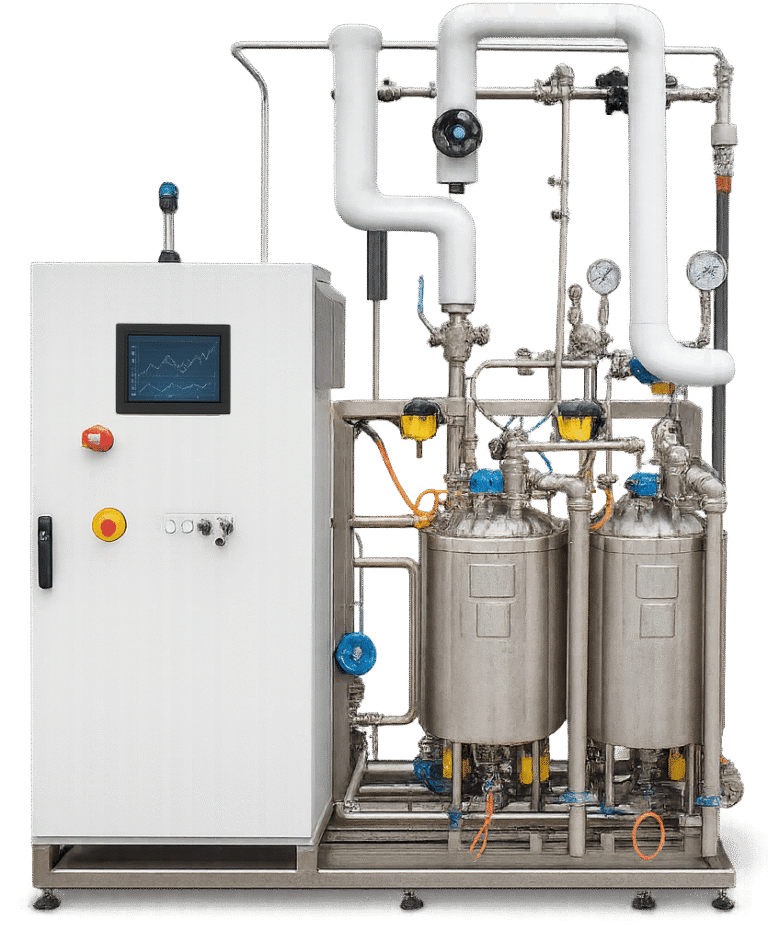
Decontamination unit Actini Group

Explore our effluent decontamination systems

Laboratory effluent decontamination systems

Compact, automated thermal treatment systems designed for research laboratories, biotechnology facilities, and small-volume biological liquid waste applications.

Our laboratory range includes point-of-use equipment, plug-and-play electric systems, and solutions for challenging effluents.

Industrial effluent decontamination systems

Thermal treatment systems designed for pharmaceutical manufacturing, biotechnology production, vaccine facilities, and industrial biological waste applications.

ACTINI offers batch and continuous technologies, from standardized skid-mounted equipment to configurable and custom-engineered solutions for demanding industrial processes.

Discover our batch and continuous EDS systems

Batch effluent decontamination systems

Batch EDS systems treat liquid biowaste in successive controlled cycles. They are suitable for intermittent waste generation, variable operating conditions, and applications requiring flexible thermal treatment.

Continuous effluent decontamination systems

Continuous EDS systems provide controlled thermal treatment of flowing liquid biowaste. They are designed for industrial facilities requiring higher treatment capacities, automated operation, and efficient integration into production infrastructure.

Complete effluent decontamination systems product comparison

Product

Application

Technology

Maximum daily capacity

Heat source

Effluent characteristics

KUBE Laboratory Batch 26 gal/day (100 L/day) Electric Water-like
SINK Laboratory Batch 26 gal/day (100 L/day) Electric Water-like
MICRO10 Laboratory Batch 80 gal/day (300 L/day) Electric Water-like
DIRECTSTEAM Laboratory Batch 260 gal/day (1,000 L/day) Steam Particles / viscous
MICRO30 Laboratory Batch 790 gal/day (3,000 L/day) Electric Water-like
ULTIBATCH Industrial Batch 1,050 gal/day (4,000 L/day) Steam Aqueous / small particles
CYCLOBATCH / BDS Industrial Batch 4,200 gal/day (16,000 L/day) Steam Solids / viscous
ULTIMATE ULT-1000 Industrial Continuous 4,200 gal/day (16,000 L/day) Steam Water-like
EXTREMATE Industrial Continuous 4,200 gal/day (16,000 L/day) Steam Water-like
ULTIMATE PLUS Industrial Continuous 50,700 gal/day (192,000 L/day) Steam Water-like
FDS / FDS PLUS Industrial Continuous 50,700+ gal/day (192,000+ L/day) Steam or electric Water-like; material options for aggressive effluents

Daily capacities for continuous systems are based on 16 operating hours per day. Cyclobatch daily capacities are based on 20 operating hours per day. Maximum capacities are configuration-dependent.

Tecnical schema

Need help selecting the right EDS?

System selection depends on daily effluent volume, peak flow, waste composition, biological treatment requirements, available utilities, and facility integration constraints.
ACTINI USA supports customers and engineering partners from equipment selection and process engineering through commissioning and qualification support.

Frequently asked questions about effluent decontamination systems (FAQ)

What is an effluent decontamination system (EDS)?

An Effluent Decontamination System (EDS), also known as a BioKill or biowaste inactivation system, treats biologically contaminated liquid waste before discharge. ACTINI specializes in thermal EDS technologies for laboratories, pharmaceutical manufacturing, biotechnology, and high-containment facilities.

What is the difference between batch and continuous EDS?

Batch EDS systems treat liquid biowaste in controlled cycles and are suitable for intermittent waste streams and challenging effluents. Continuous EDS systems treat flowing liquid waste and are generally suited to higher processing capacities. The best choice depends on daily volume, effluent composition, and operating requirements.

How do I determine the right EDS capacity?

EDS sizing depends on daily waste volume, peak flow, operating hours, effluent characteristics, and required treatment conditions. ACTINI offers systems ranging from compact laboratory units treating up to 26 gal/day (100 L/day) to custom-engineered continuous systems designed for capacities exceeding 50,700 gal/day (192,000 L/day).

Can ACTINI provide EDS solutions for BSL3 and BSL4 facilities?

Yes. ACTINI offers thermal effluent decontamination solutions for applications ranging from BSL-1 to BSL-4. System design, containment measures, treatment parameters, and validation requirements are evaluated according to each facility’s specific biological risks and operational needs.

Does ACTINI support EDS commissioning and validation?

Yes. ACTINI provides engineering support, Factory Acceptance Testing (FAT), installation and commissioning assistance, Site Acceptance Testing (SAT), and qualification support, including thermal mapping and biological indicator testing services. The scope of validation support is defined according to project requirements.